Major John André
(1750 — 1780)
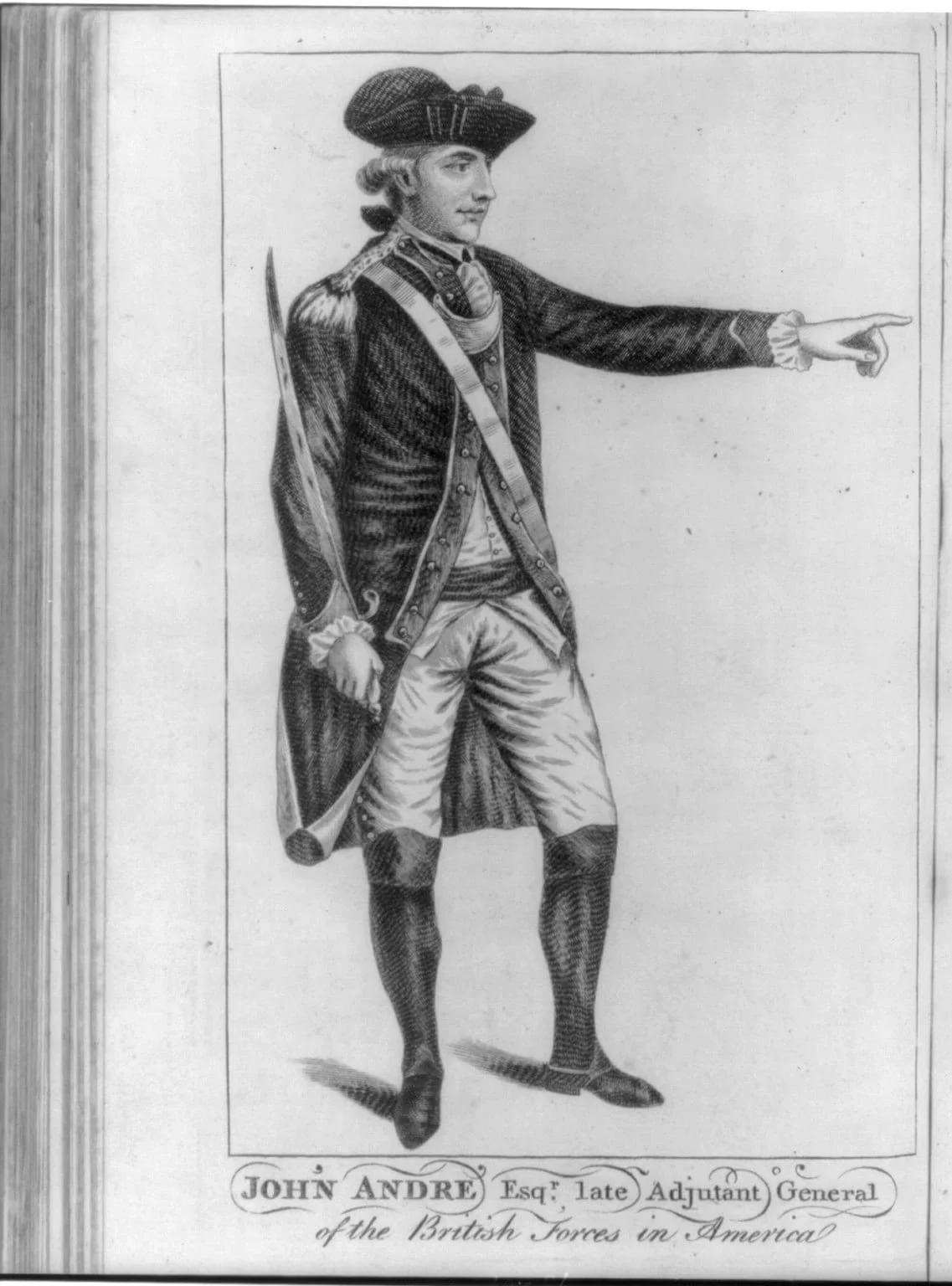
¶
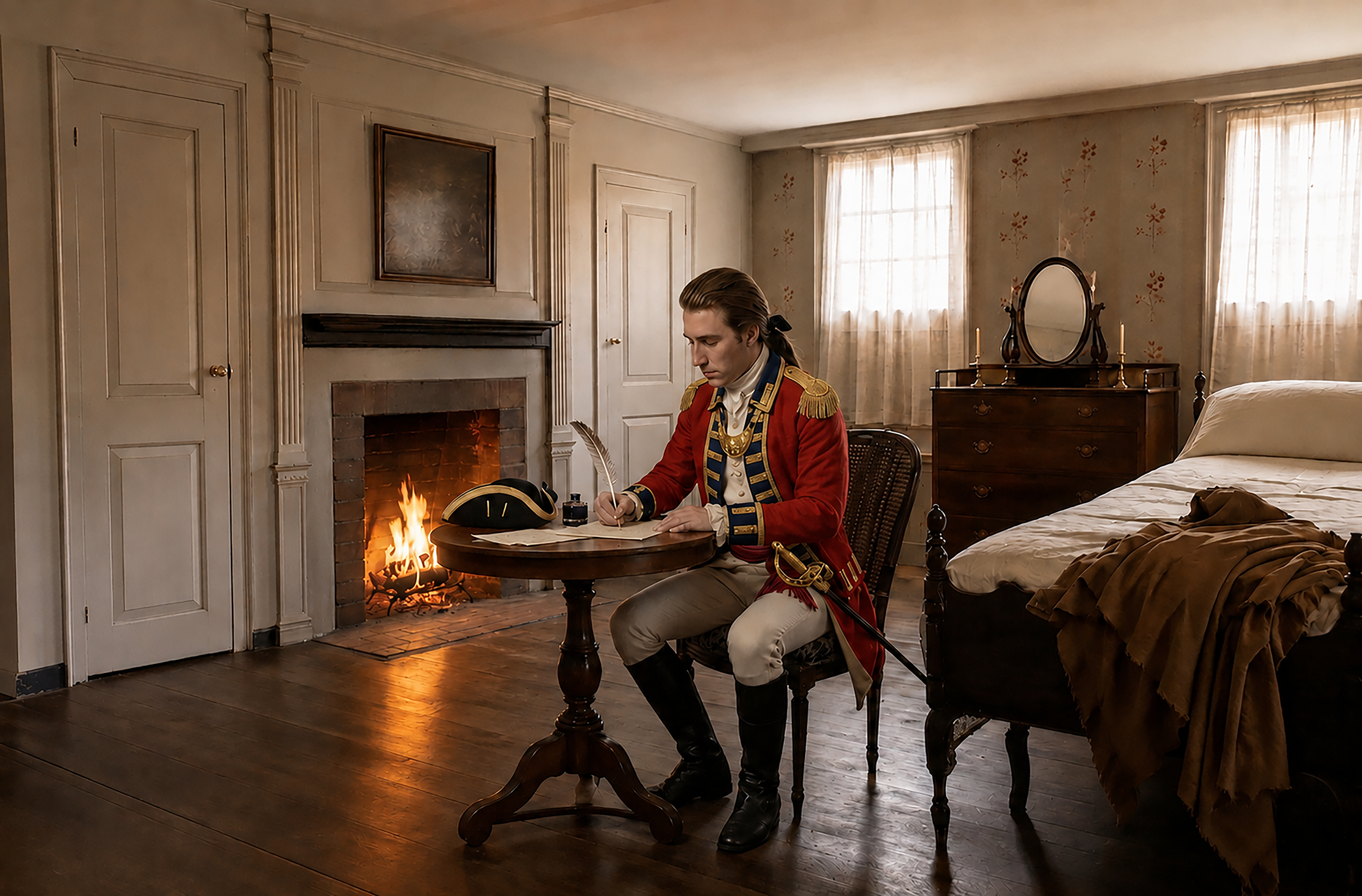
†
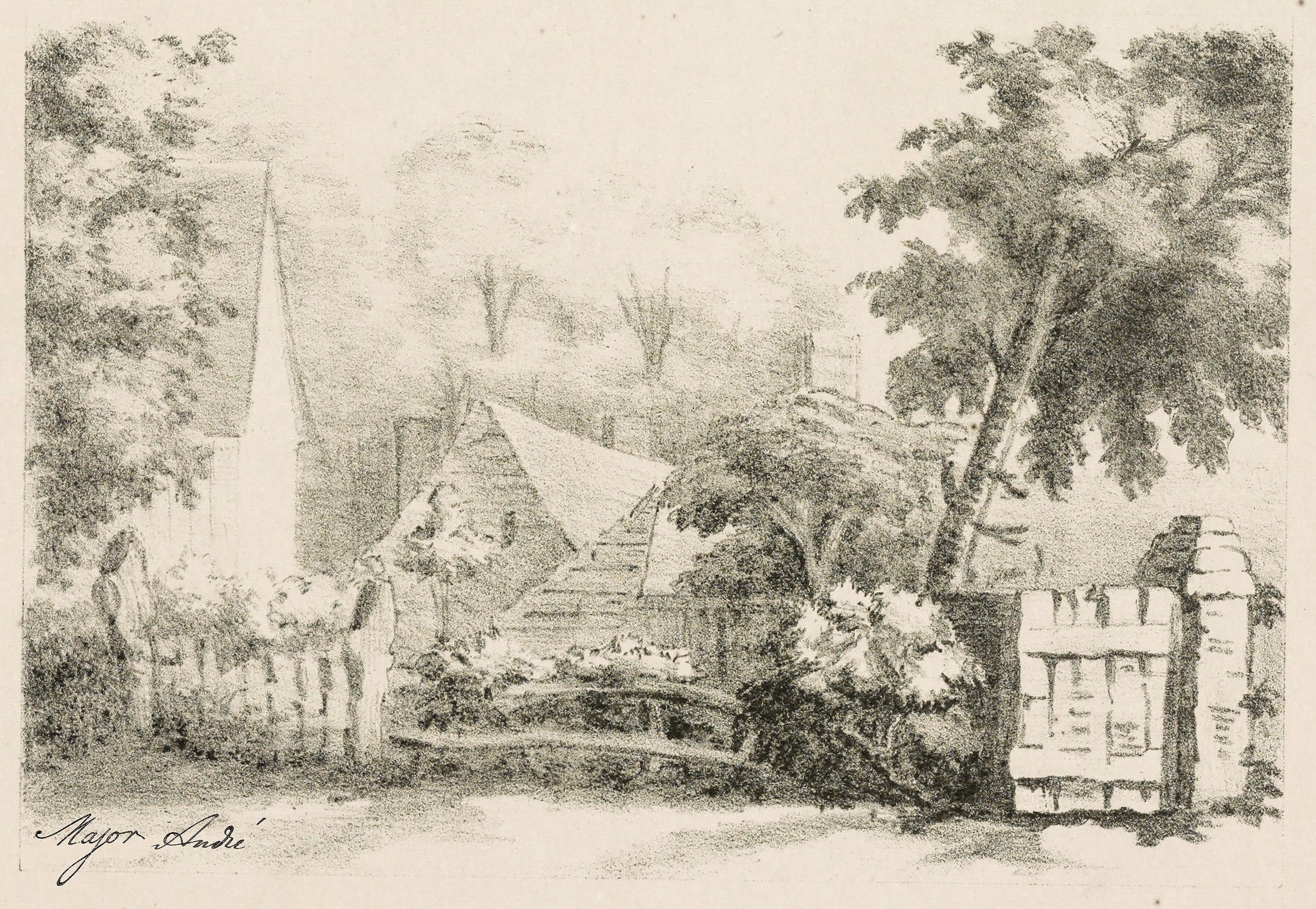
Description: A scenic landscape sketch drawn by Major André while he was held captive as a prisoner of war in Lancaster.
Note: Modified to include Major André's autograph and the correct accent mark in the lower corner, and digitally restored to account for fading.
British Army Officer
Head of Intelligence
Adjutant General
Draughtsman
Polyglot
Painter
Musician
Singer
Artist
Poet
Major John André was a British Army officer, artist, linguist, draftsman, poet, singer, musician, painter, and intelligence officer during the American War of Independence. Born on 2 May 1750 in Clapton, London, to a Genevan father and a mother of French-Huguenot descent, he belonged, from the beginning, to more than one world: British by service, continental by inheritance, and unusually cosmopolitan in formation. His education and travels carried him through the intellectual and commercial networks of Britain and Continental Europe before military service brought those abilities into increasingly consequential use.
Educated in modern languages, music, drawing, mathematics, and military draftsmanship, André united artistic perception with practical discipline to an uncommon degree. In 1772, he studied at the University of Göttingen, then one of Europe’s important centres of Enlightenment scholarship. A surviving letter written by André from Göttingen on 19 July 1772 places him there directly, while German literary scholarship identifies him among a small group of British students associated with Heinrich Christian Boie and records his departure from Göttingen on 1 November of that year.
His time on the Continent formed part of a broader cosmopolitan education that later proved intensely practical. His command of French, Italian, and German allowed him to operate within Britain’s multinational military world and to communicate across cultural boundaries that could materially affect military and political relationships.
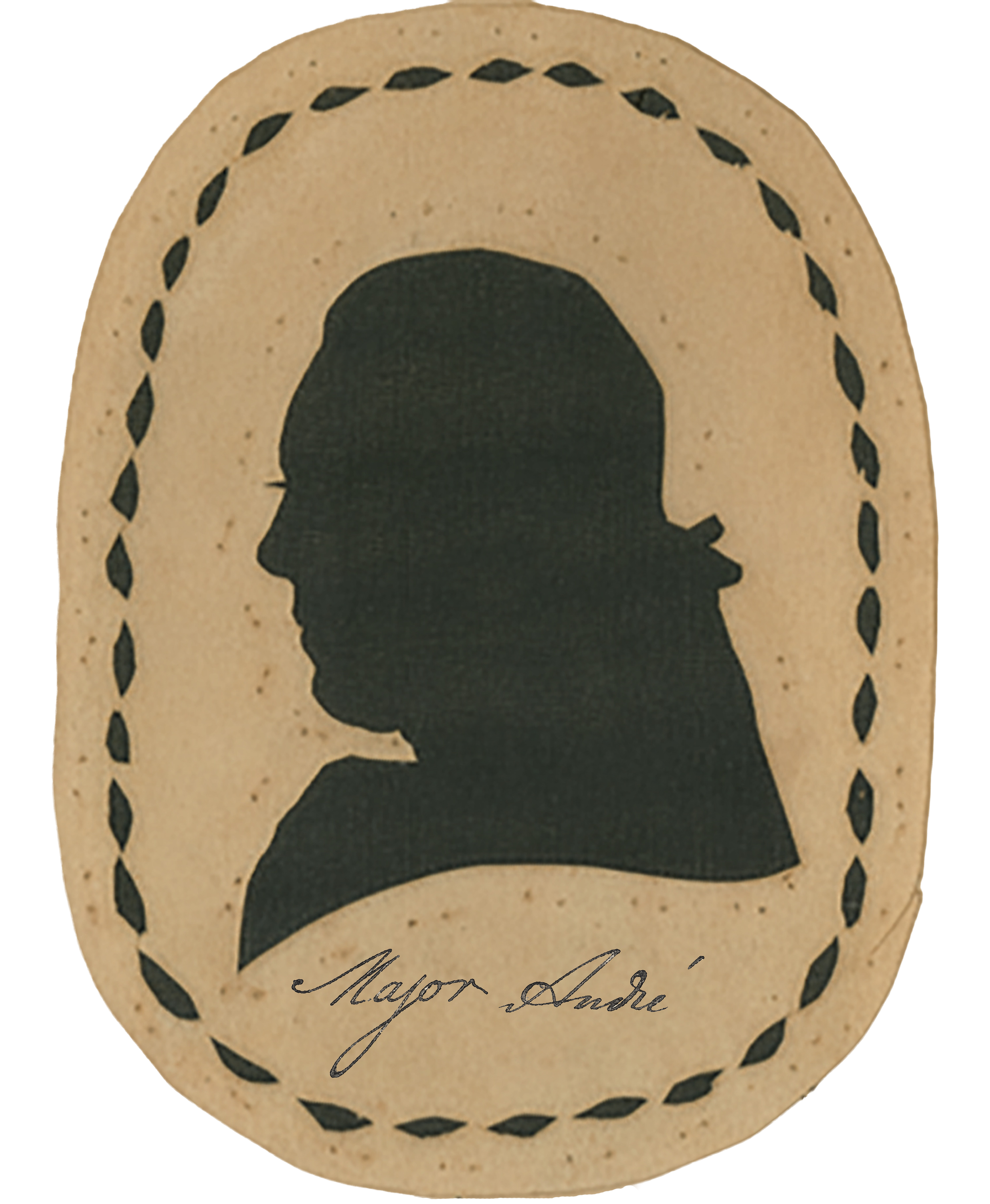
‡
Beyond the Legend
History most often remembers André for the final weeks of 1780, when his involvement in Benedict Arnold’s attempted surrender of West Point led to his capture, trial, and execution. Yet that famous ending has long overshadowed the life that preceded it.
Death leaves a person vulnerable to interpretation. The living may rearrange the dead into whatever shape serves memory, politics, romance, or myth, while the subject himself has no recourse. Major John André has been especially vulnerable to this treatment. His final days have been made to stand for the whole of his life, and his attachment to Honora Sneyd has too often been mistaken for the source of his ambition rather than one episode within a much larger formation.
Winthrop Sargent’s nineteenth-century biography, built upon extensive correspondence and manuscript evidence, dismantles one of the most enduring myths surrounding André: that he entered the army as a heartbroken young man after losing Honora Sneyd. The chronology tells another story. André had already rejected the merchant’s desk, secured his commission in the 7th (Royal English Fusiliers), and committed himself to military service before Honora’s marriage.
Writing from Warnford Court, surrounded by ledgers and bills, he sketched with characteristic wit the commercial life he refused to embrace:
“I figured a merchant as a middle-aged man, with a bob-wig, a rough beard, in snuff-colored clothes, grasping a guinea in his red hand...” *
His course was defined less by disappointment than by ambition, discipline, and a determination to place his abilities in active service.
Structural Talents & Frontier Realities
The qualities that later distinguished André as an intelligence officer were visible long before he entered that role. His continental education, linguistic range, artistic training, mathematical interests, and habits of close observation had already brought together many of the abilities that intelligence work would later demand.
The same hand that drafted military correspondence wrote poetry. The same eye that produced portraits and landscapes read terrain with remarkable precision. His gift for languages became equally practical. Operating within Britain’s multinational forces, he served as an important intermediary among Hessian contingents and German-speaking settlers whose confidence could not always be secured through English alone.
His early experience of the war, however, was far removed from the ordered conventions of European military life.
Captured after the fall of Fort St. John and later paroled in Pennsylvania, André encountered a frontier conflict marked by political volatility, uncertain authority, and collapsing discipline. The agreed terms of capitulation were ignored as British officers’ private baggage was plundered by American troops. André preserved the miniature portrait of Honora Sneyd only by concealing it in his mouth. Later, at Carlisle, local militia forced their way into his lodgings and killed his beloved pointer dogs before him—acts aimed less at physical injury than at stripping officers of the dignity attached to gentlemanly rank: direct assaults upon property, honour, and the code by which he had been formed.
Yet the surviving record reveals remarkably little bitterness in response.
During his parole, he taught local Quaker children to draw, continued writing and sketching, and formed unexpected friendships across political divides. Among the most striking episodes was an evening spent sharing a log cabin with a young Henry Knox, who four years later would sit on the grand tribunal that signed his death warrant. He remained curious, composed, and humane under circumstances that might have hardened a lesser man.
Keeper of Secrets, Preserver of Beauty
When André eventually became head of British intelligence, the appointment reflected abilities already demonstrated throughout his earlier career: observation, discretion, organization, linguistic fluency, and an intuitive understanding that information moved first through people before it moved through paper.
He became a creator of ciphers and a keeper of secrets, yet never abandoned the artistic habits that had always defined him.
During the British occupation of Philadelphia, André emerged not merely as a participant in the city’s occupied social world, but as one of its makers. He helped shape theatrical productions, designed scenery, composed verses, and contributed to the visual and ceremonial architecture of British Philadelphia. The Mischianza, the elaborate farewell festival staged for Sir William Howe in 1778, revealed André’s unusual command of symbol, pageantry, costume, language, and atmosphere.
Yet this artistic brilliance existed beside restraint. Sargent notes that André’s “freedom from the grosser passions” of the garrison was especially observed.
He also records André’s refusal to join in the contemptuous language often directed at Americans, preferring the word “colonists” to “rebels.” Even in war, his language preserved distinctions others allowed anger to erase.
In Philadelphia, General Grey ordered the removal of Benjamin Franklin’s possessions. André supervised the books, scientific instruments, manuscripts, and portrait with notable care. Rather than treating them as spoils of war, he handled them with the respect of a scholar preserving another scholar’s work—a decision that helped ensure their survival.
Sargent pauses in this portion of the biography to devote an entire section not to André’s military accomplishments, but to “André’s Humanity.”
The surviving accounts describe a recurring pattern: kindness toward prisoners, generosity toward civilians, intellectual curiosity, and a composure that endured even amid war.
What Remains
Those who encountered André consistently remembered qualities that official histories often overlook: courtesy without affectation, wit without cruelty, discipline without severity, and refinement without weakness.
Artist and officer were never competing identities. Each informed the other. His intellect resisted specialization long before such breadth became uncommon, and his life demonstrates that military service, artistic cultivation, scientific curiosity, theatrical imagination, and humane conduct need not exist in opposition.
This biography exists to restore that fuller person.
Beyond the legend.
What remains is a rare and formidable trace preserved in letters, drawings, military papers, friendships, and conduct. Long after the campaigns ended, those records continue to illuminate a mind that refused simplification. They invite us to remember that history is not only carried forward through battles and treaties, but through correspondence, craftsmanship, and character.
Some believe his story ended at the gallows; others believe it continued beyond his lifetime. Whatever one's conclusions, the record itself remains: a life of unusual breadth whose resonance endures as a reminder that military service, artistic cultivation, intellectual curiosity, and humane conduct need not exist in opposition—even amid one of history's most complex conflicts.
And perhaps, for a rare few, it reaches further still.
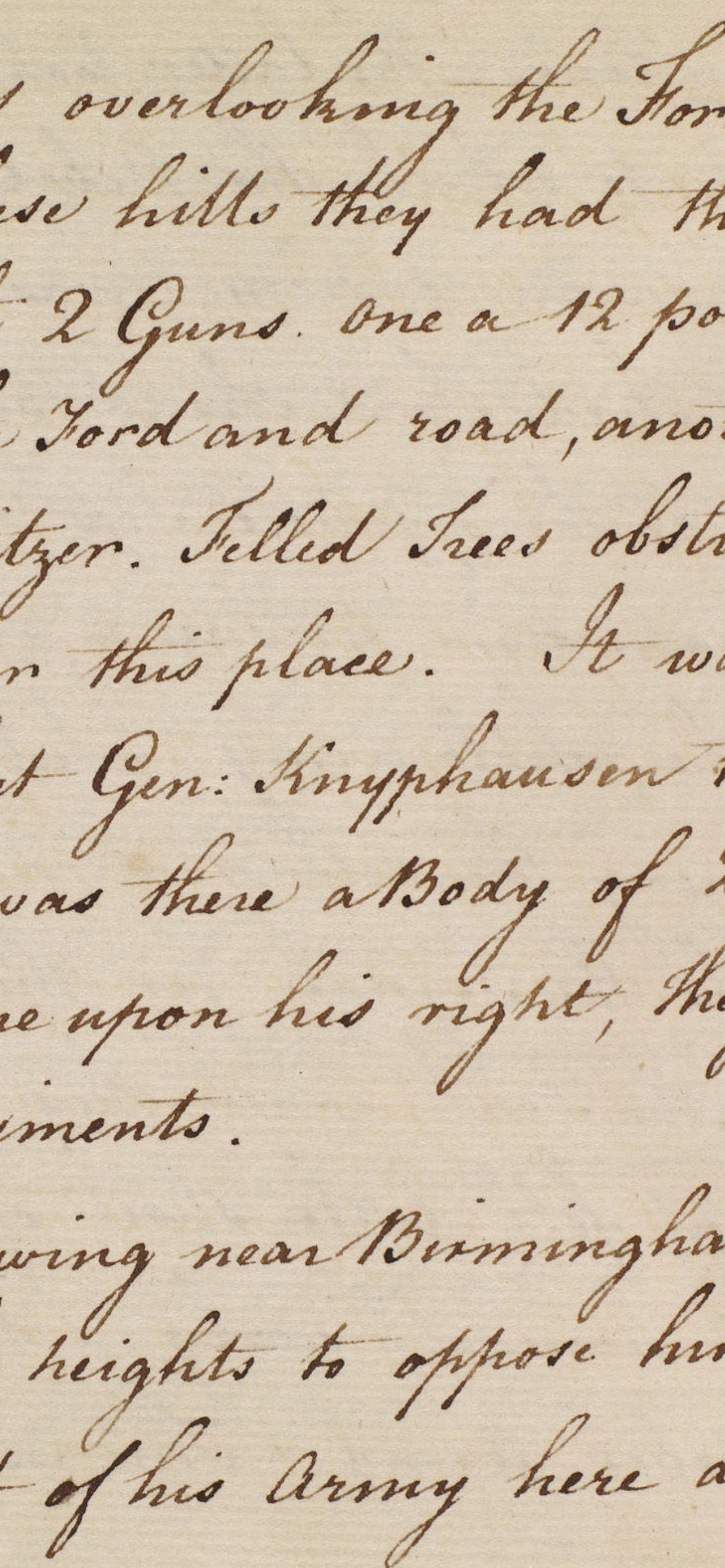
Description: A close-up snippet showcasing the elegant, distinct handwriting of Major André from his personal journal.
Note: This cropped view highlights his specific field notes regarding General Knyphausen, General Howe, and George Washington's army positions.
Origin: The Huntington.
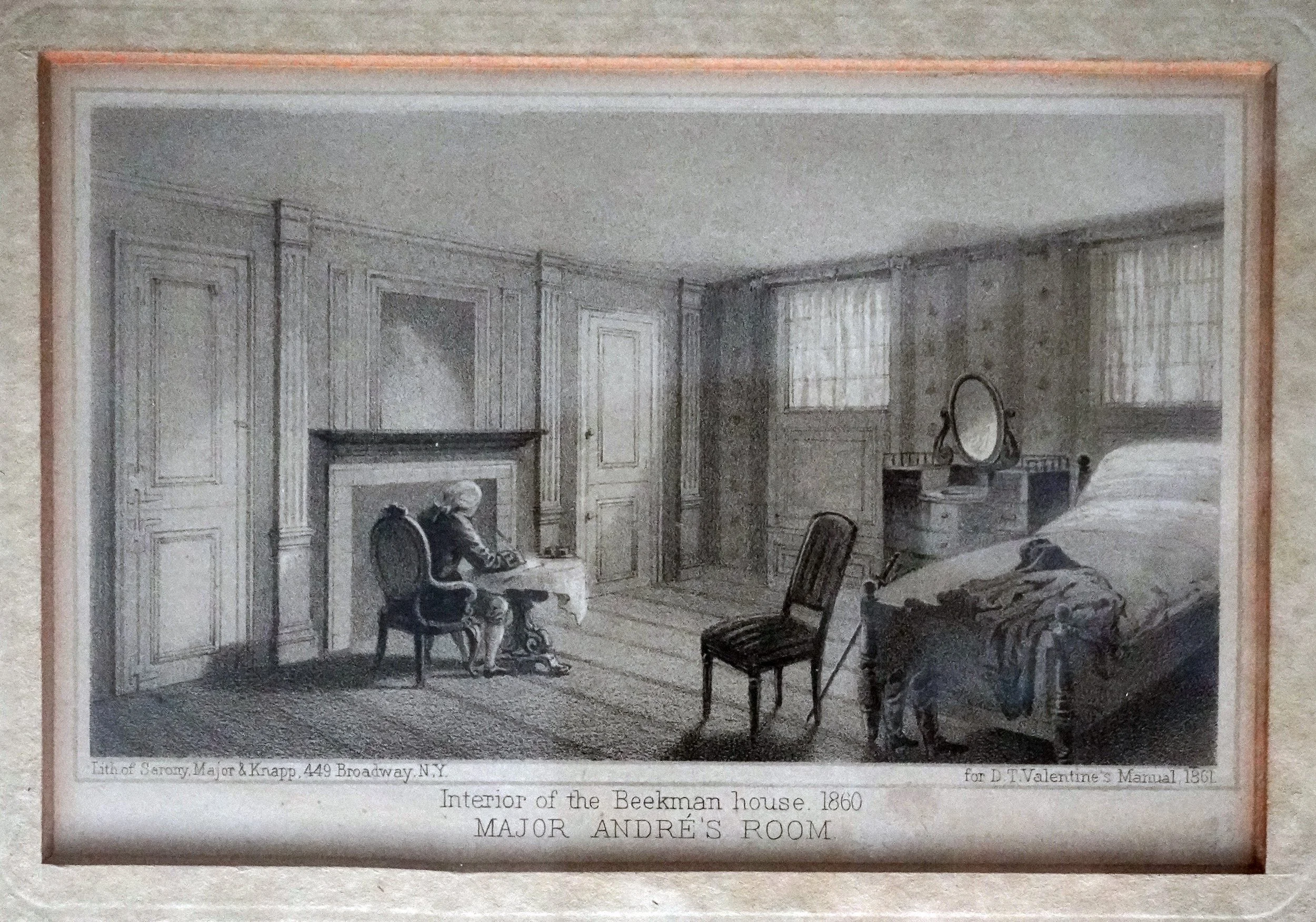
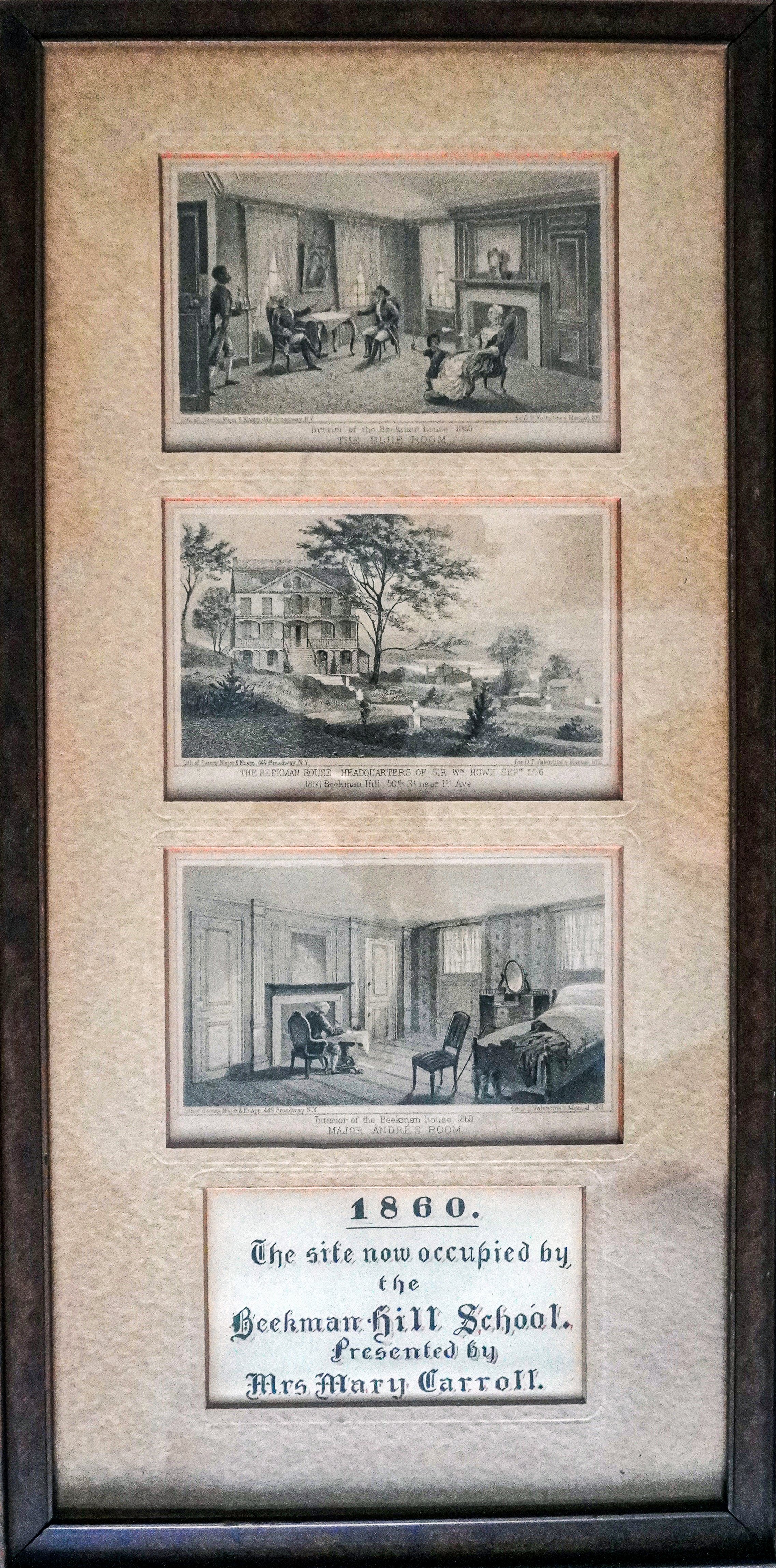
Description: The Major André Collection™ preserves an original framed triptych of three 1860–61 Beekman House lithographs: The Blue Room, The Beekman House, and Major André’s Room. The only other known surviving impressions presently identified are held individually by The Metropolitan Museum of Art and the New York Public Library.
Origin: The Major André Collection™.
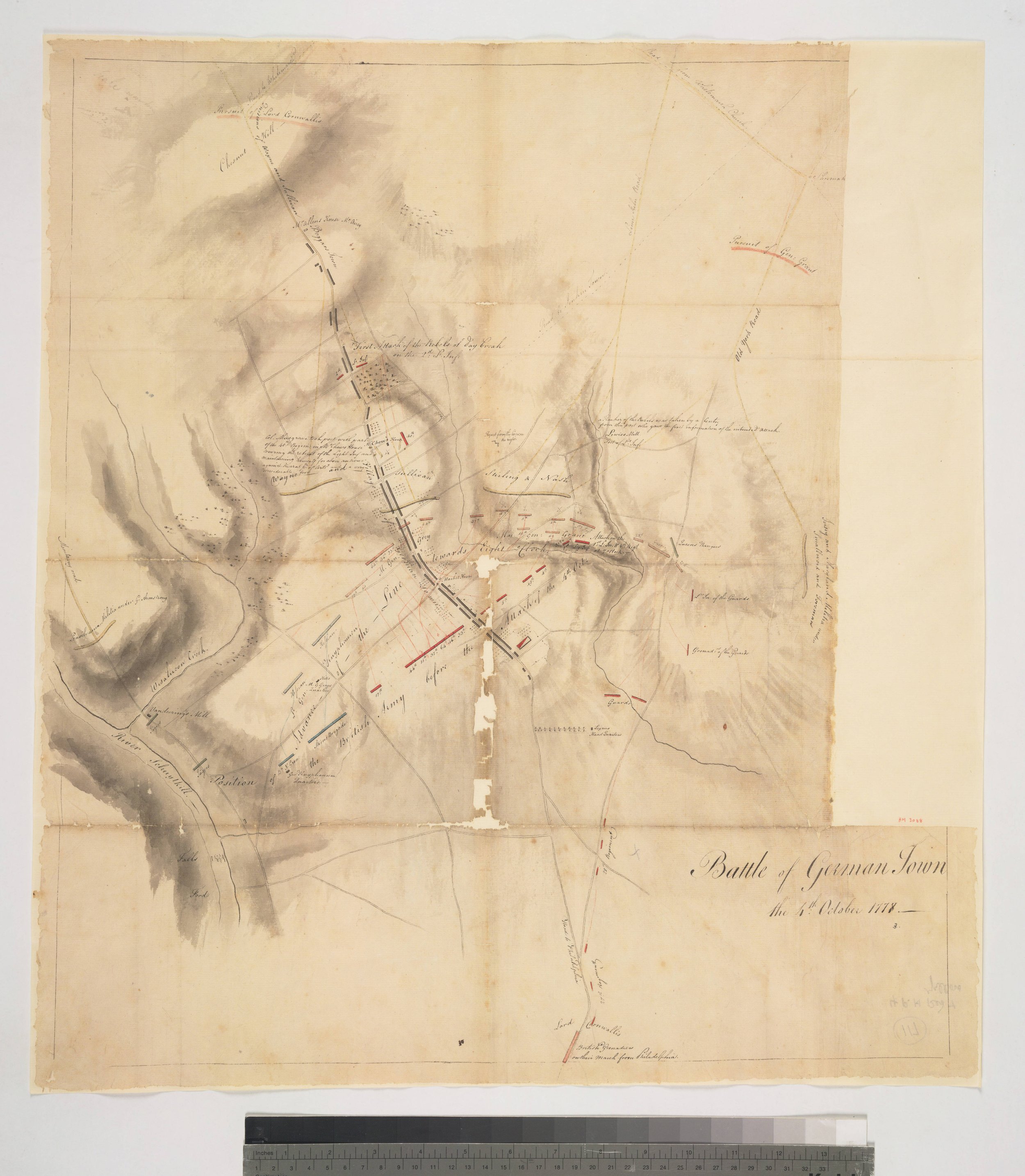
Description: A historical military map detailing the Battle of Germantown fought on October 4, 1777.
Origin: Created by Major André; sourced from The Huntington.
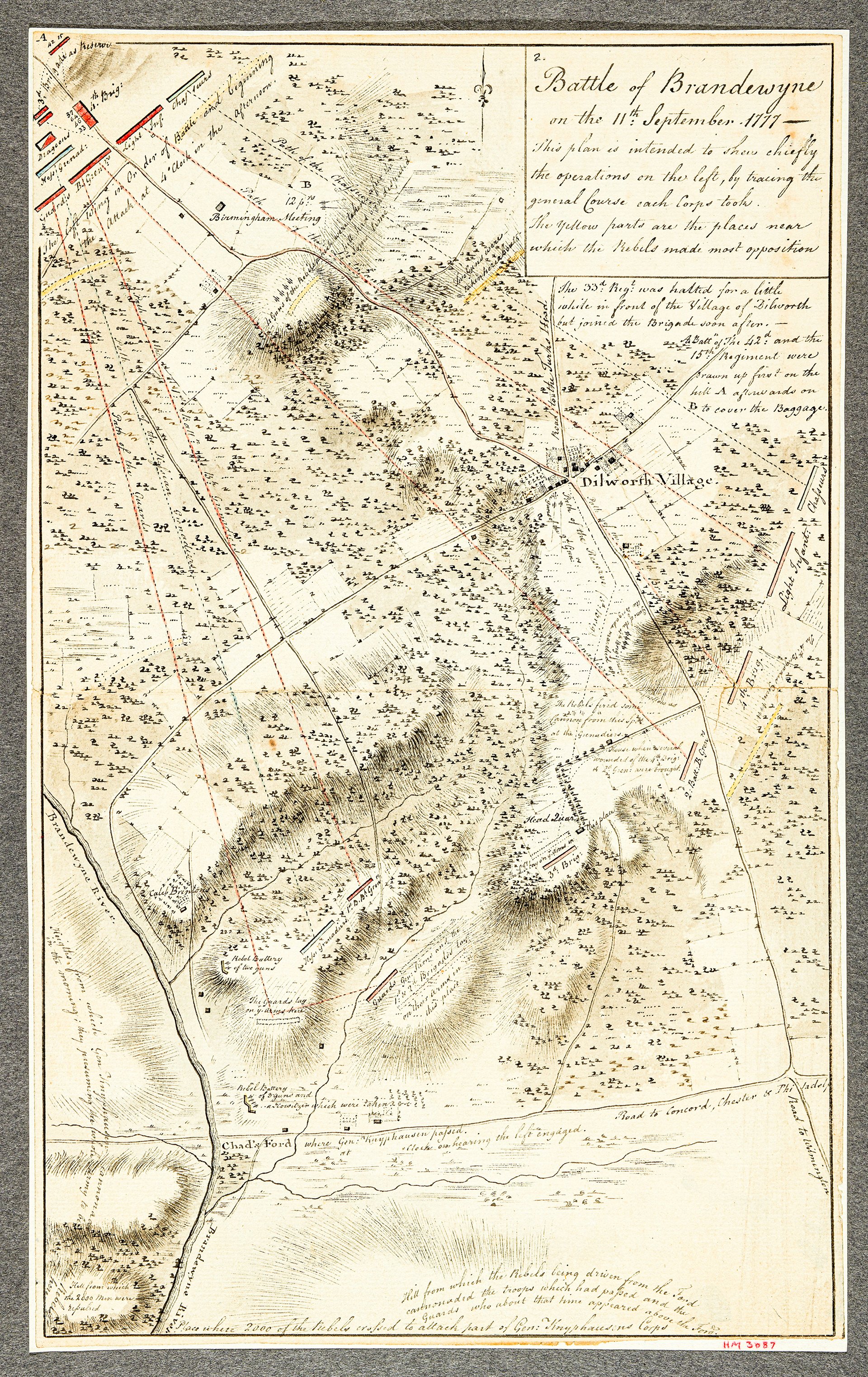
Description: A historical military map detailing the Battle of Brandywine fought on September 11, 1777.
Origin: Created by Major André; sourced from The Huntington.
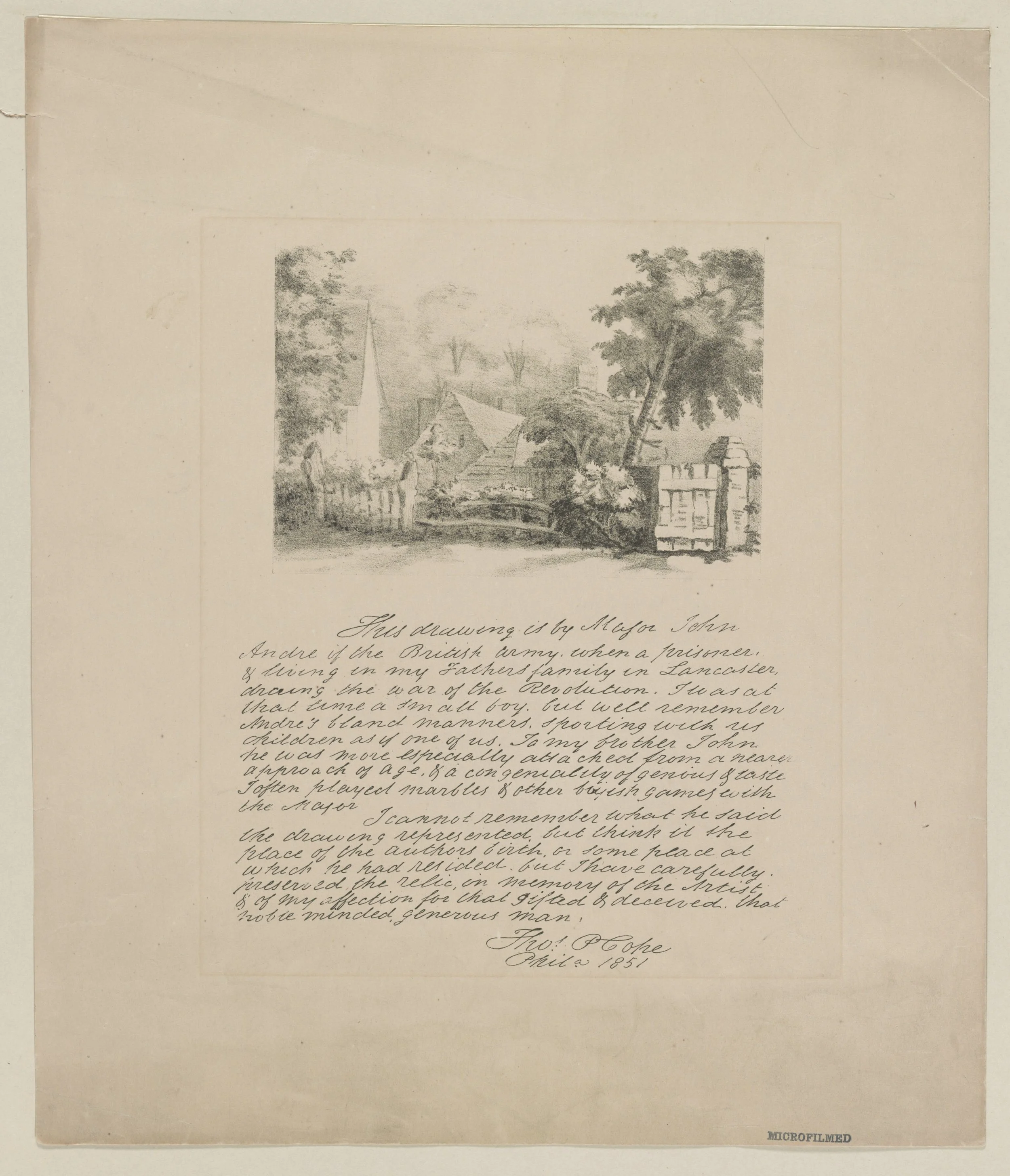
Description: A scenic landscape sketch drawn by Major André while he was held captive as a prisoner of war in Lancaster.
The Story: The inscription, written by Thomas P. Cope in 1851, reveals that André drew this piece while living with Cope's family during his captivity. The family cherished and saved this rare relic of the Revolutionary War to preserve the memory of the "gifted & deceived" major.
The Transcription: The text written below the drawing reads:
"This drawing is by Major John Andre of the British Army, when a prisoner, & living in my Fathers family in Lancaster, during the war of the Revolution. I was at that time a small boy, but well remember Andre’s bland [§] manners, sporting with us children as if one of us. To my brother John he was more especially attached from a nearer approach of age, & a congeniality of genius & taste. I often played marbles & other boyish games with the Major.
I cannot remember what he said the drawing represented, but think it the place of the authors birth, or some place at which he had resided, but I have carefully preserved the relic, in memory of the Artist, & of my affection for that gifted & deceived, that noble minded, generous man.
Thos P Cope Philad. 1851"
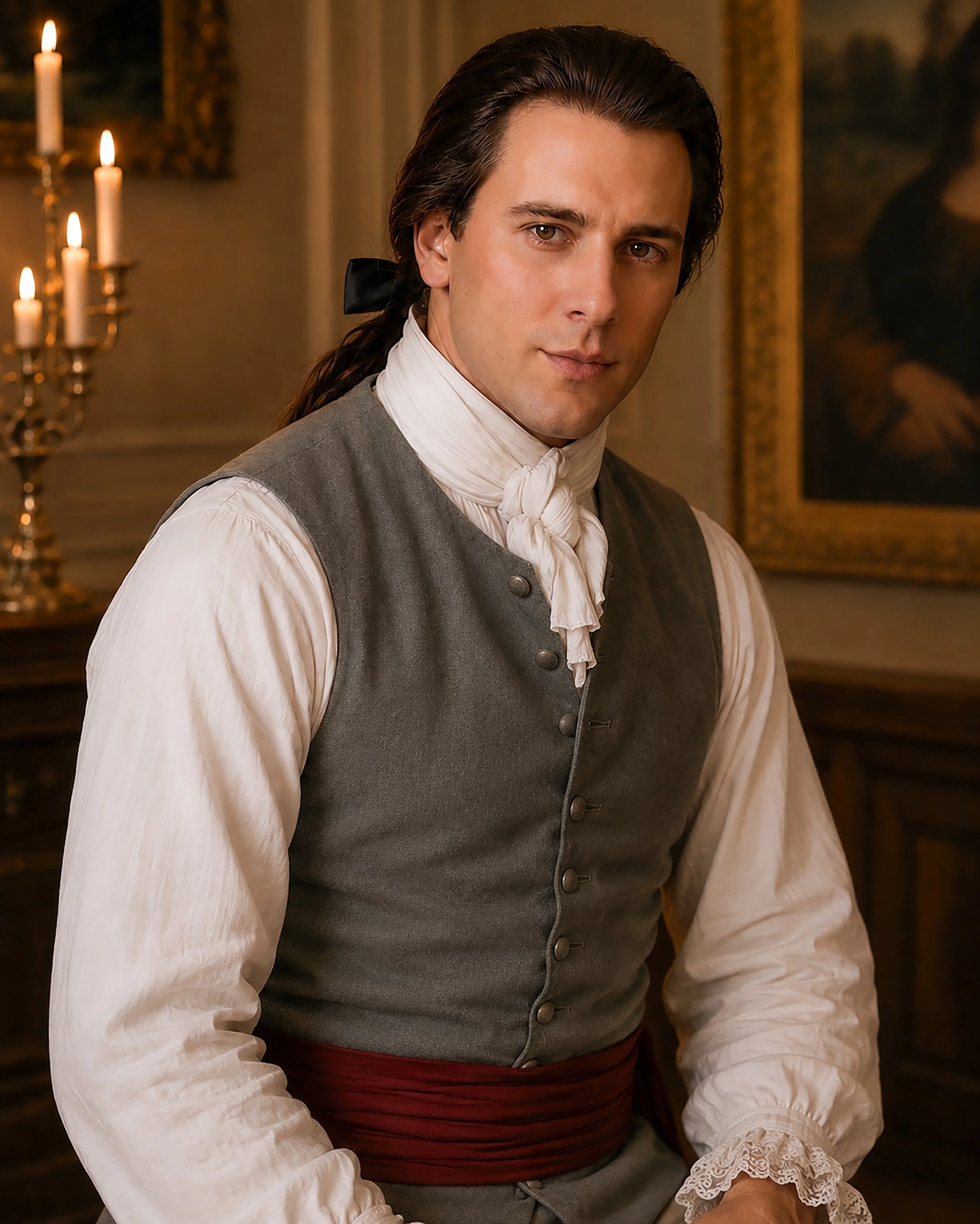
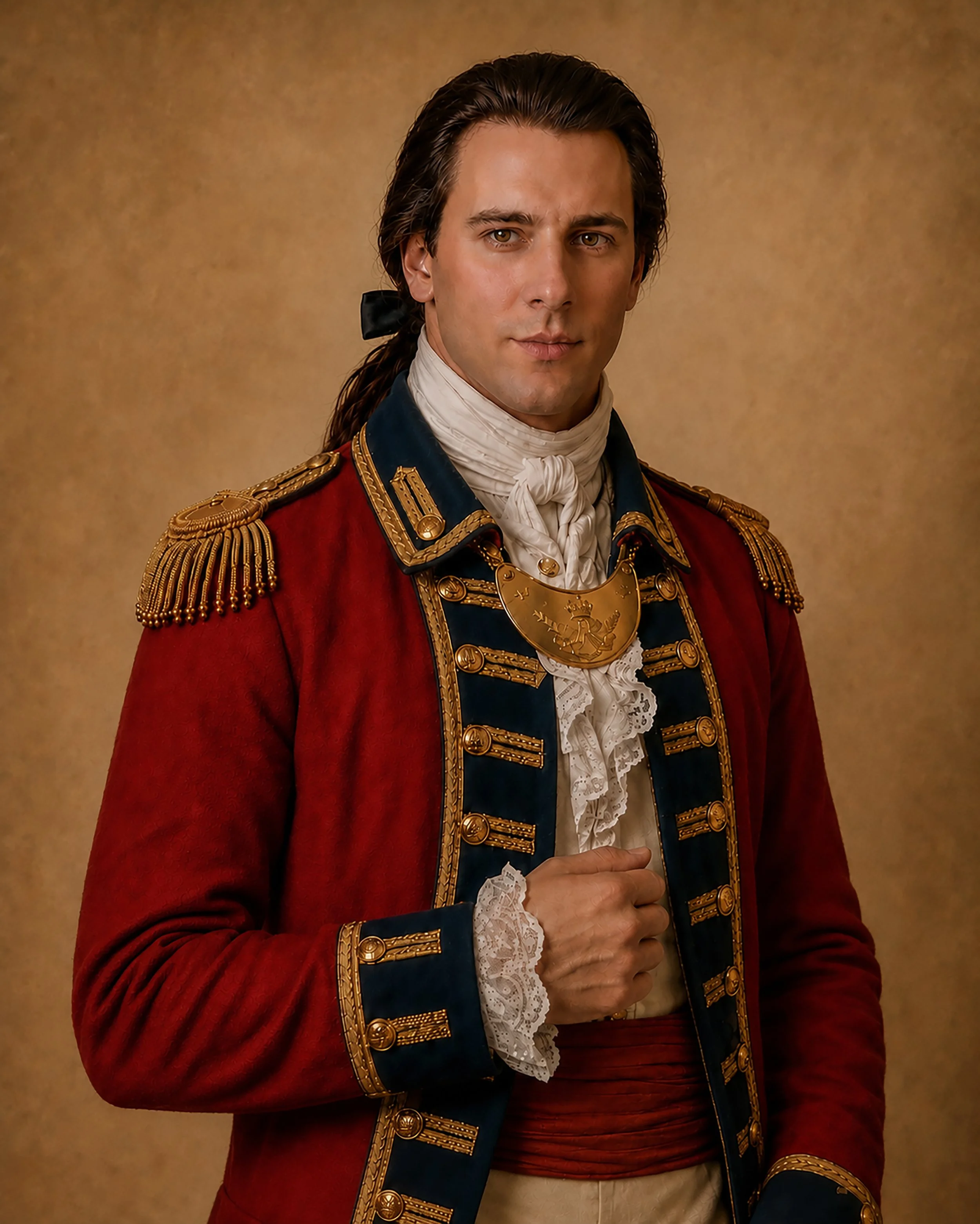
Description: Major John André contemporary interpretive portrait, 2026. From an ongoing body of work exploring André across history, memory, and contemporary experience; not intended as a reconstruction of period dress.
Footnotes
¶
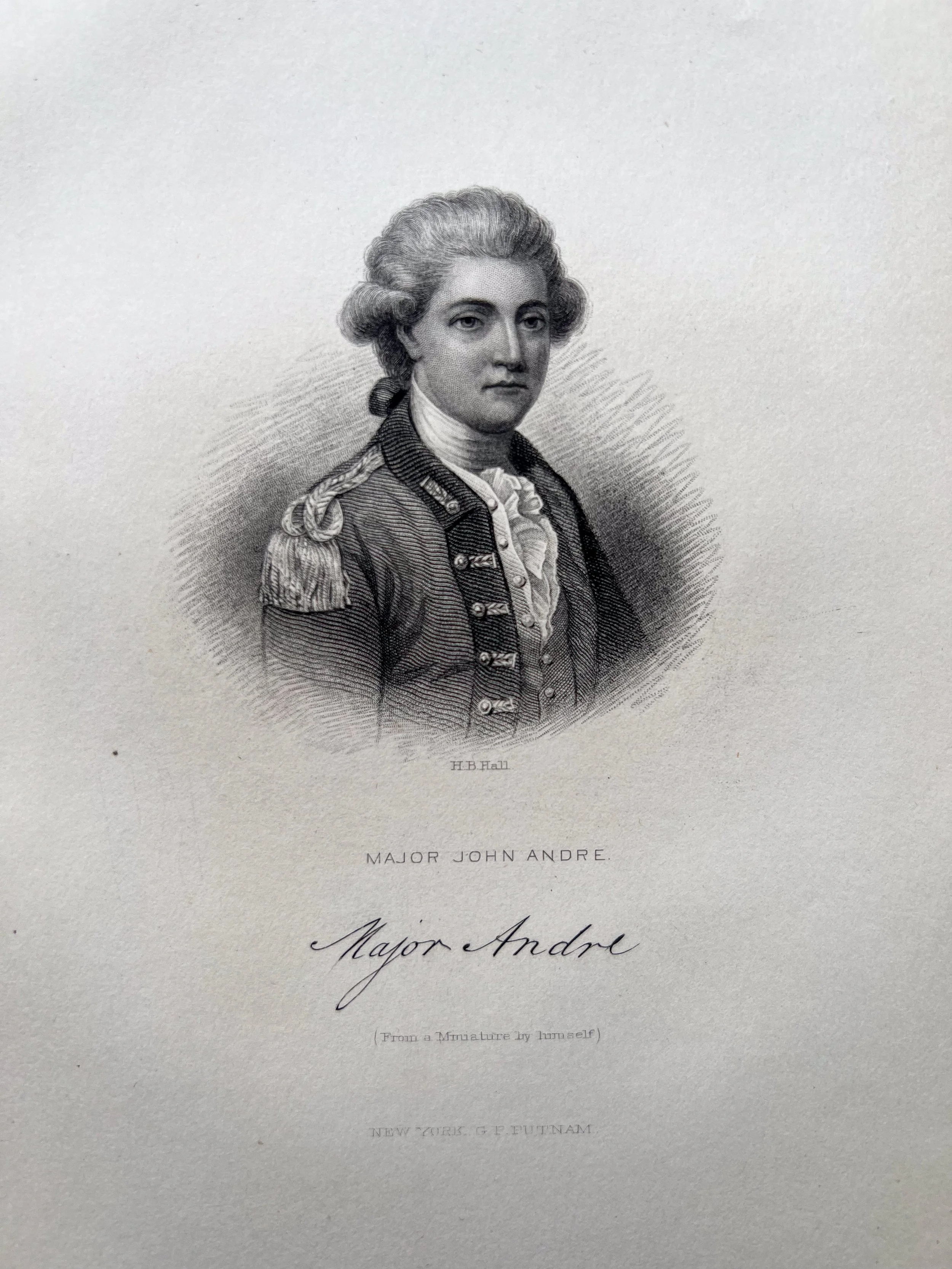
Engraved print of Major John André, after a self-portrait miniature, circa 1857.
Origin: The Major André Collection™.
†
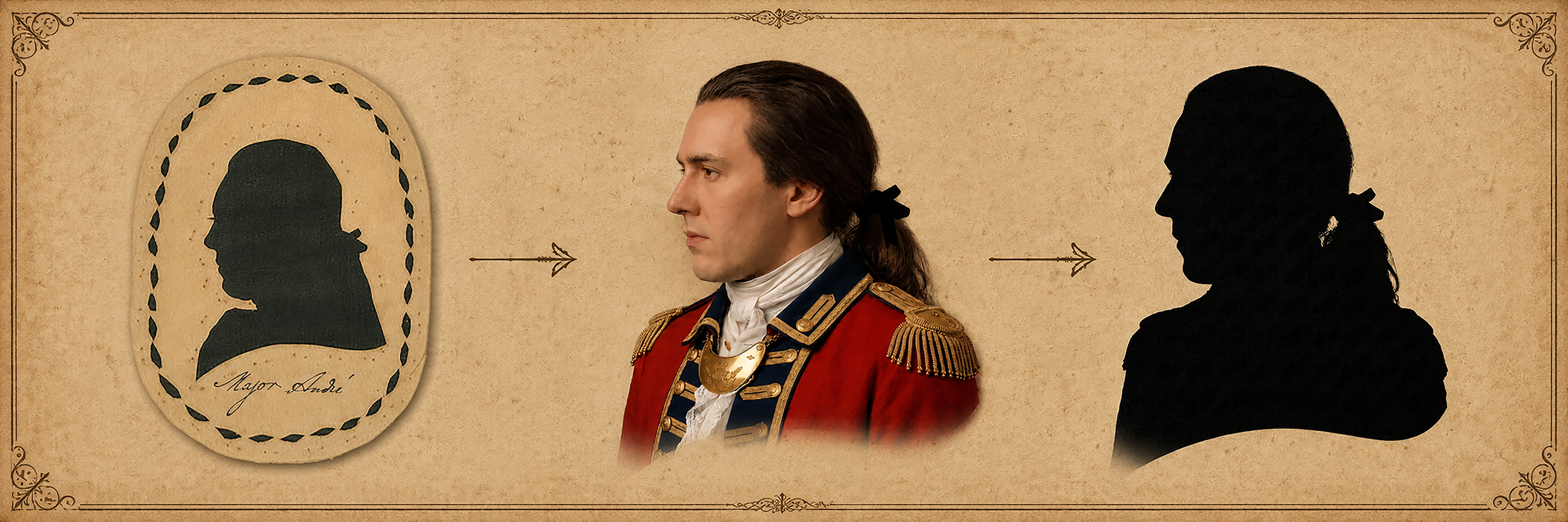
AI-assisted interpretive rendering of Major André using a copy of his silhouette for his likeness, and an 1860 engraving of his bedroom in Beekman Mansion [Source: The Major André Collection™] for the room.
*
“a bob-wig… snuff-colored clothes… grasping a guinea in his red hand” — André’s phrase is a deliberate satirical caricature of the mercantile life he dreaded. Written while he was still very young, the image compresses his aversion to the counting-house into three visual details: the practical bob-wig, the dull snuff-colored clothing, and the reddened hand grasping money.
A bob-wig was a short, practical wig associated with tradesmen and working professionals rather than aristocratic display or military elegance.
Snuff-colored clothes suggest dull brown garments suited to ink, dust, tobacco, and the repetitive labor of the desk.
The red hand completes the satire: not the gloved or refined hand of a gentleman of letters, but a coarser hand marked by work, weather, or the handling of money.
Together, the details show André reducing the life of commerce to a costume of drab utility—exactly the future he refused to inhabit.
‡
Description: An 18th-century silhouette profile of Major John André, presumably traced by another artist and then meticulously fashioned into the final paper cutout by André himself. The artifact was preserved for generations before being gifted to the Library Company of Philadelphia by Mrs. John Meredith Read in 1900. Note: The signature at the bottom has been edited to reflect the specific handwritten version of "André" from his final letter written to General George Washington.
§
In the 18th and 19th centuries, "bland" did not mean boring, tasteless, or plain like it does today. Instead, it derived directly from its Latin root (blandus) meaning mild, gentle, charming, and gracious in manner. When Thomas P. Cope remembered André's "bland manners," he was paying him a high compliment—recalling a man who was exceptionally courteous, warm, and gentle with the children of the household despite being a prisoner of war.
On André’s Likeness
The Major André Collection™ uses André’s silhouette as the principal basis for AI-assisted interpretive renderings of his likeness. Eighteenth- and nineteenth-century portraits were often shaped by artistic convention, idealization, and later reinterpretation, whereas a silhouette preserves the sitter’s profile more directly. For that reason, the Collection treats the surviving silhouette preserved by the Library Company of Philadelphia as its primary visual authority for André’s facial geometry, while painted, miniature, and engraved likenesses are treated as secondary comparative sources.